The racist laws in every state
When people picture legal racism in the United States, they often picture the antiquated, "Gone With the Wind" era of the South: segregated lunch counters, signs over water fountains, or Black children walking into newly integrated schools while crowds shouted at them. Those moments are an important part of this history. But they can also leave us with the impression that racism in law belonged mostly to one region of the country.
It didn't. Every state passed laws that used race to decide who could live there, own land, vote, marry, attend school, or be treated as a full citizen. The laws did not look exactly the same everywhere, and they did not always sound openly hateful — some of the most effective ones didn't even have to mention race directly at all in order to have the impact of preventing certain people from settling down in certain areas, or establishing relationships, or even having children along racial lines.
Exhibit · Interactive
One racist law from every state
Every state, and the law it took longest to give up.
An explicitly race-based law or policy from every state, and the year it finally fell.
Select any state, or switch to List & dates to see them ordered by year.
Source · Each state panel carries its own citation — the statute, ordinance, constitutional clause or ruling, and the record of its repeal.
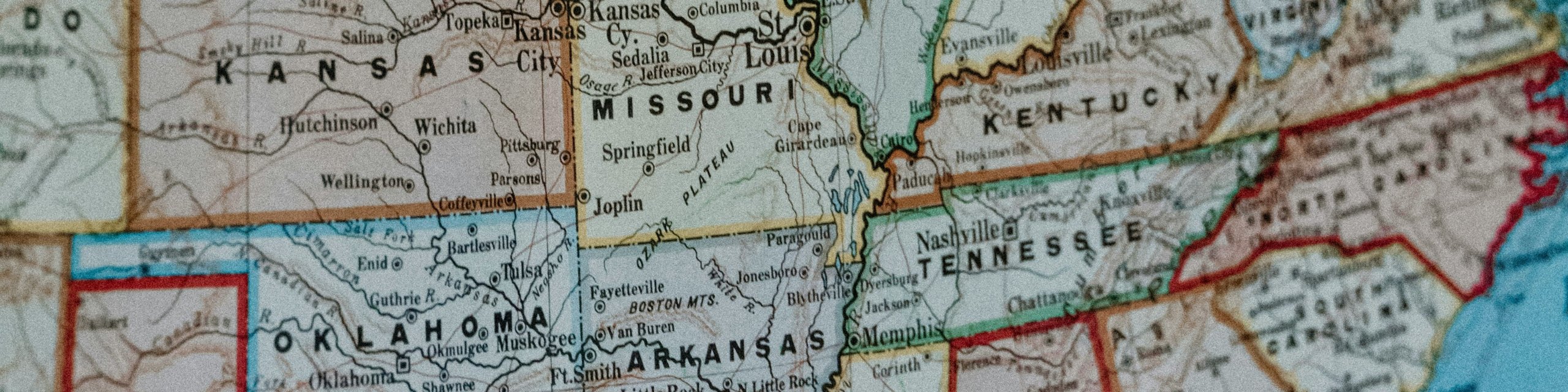
A map of these laws makes the national pattern easier to see. The South built an especially large and violent system of segregation, but the North, Midwest, and West created their own rules around settlement, voting, marriage, property, and citizenship. This was not one part of the country behaving badly while the rest moved forward. It was a country expressing the same basic idea in different ways.
Another thing this map helps us see is how recent much of this history really is. You’ll likely be surprised by how many of these laws remained in state constitutions well into the modern era, whether they were still being actively enforced or not. People who worked in hospitals, taught medical students, led public agencies, and wrote health policy were alive while these rules were still shaping where families could live, which neighborhoods received investment, and what services were built around them.
That’s important because institutions don’t start over every time a law changes. Hospitals, universities, licensing boards, and public health departments were all built and shaped during this history. That doesn’t mean every person working in those institutions today shares the beliefs behind those laws, but it does mean they naturally inherited systems created while those beliefs were even more predominantly shaping how decisions were made. Once we understand that, it can become easier to ask what changed, identify what didn’t, and consider what kinds of actions may be required to address it.

“Negro Rule” — a cartoon run in the campaign to ratify North Carolina’s disfranchising constitution, which introduced a literacy test and a grandfather clause. The law was written after the fear was manufactured, not before. Norman E. Jennett, Raleigh News and Observer, 4 July 1900. Library of Congress Prints and Photographs Division.
Get new chapters and updates →
Sources 50 entries
- Every state entry names a specific statute, ordinance, constitutional clause or ruling, the years it stood, and the date it fell. The citation for each appears on that state’s panel.
- Repeal dates for anti-miscegenation statutes are drawn from the Tennessee State Library & Archives repeal table and Peggy Pascoe, What Comes Naturally (Oxford, 2009). Sixteen states’ bans fell together in Loving v. Virginia, 388 U.S. 1 (1967).
- Where a state’s entry rests on a court ruling rather than a statute, the panel says so.